
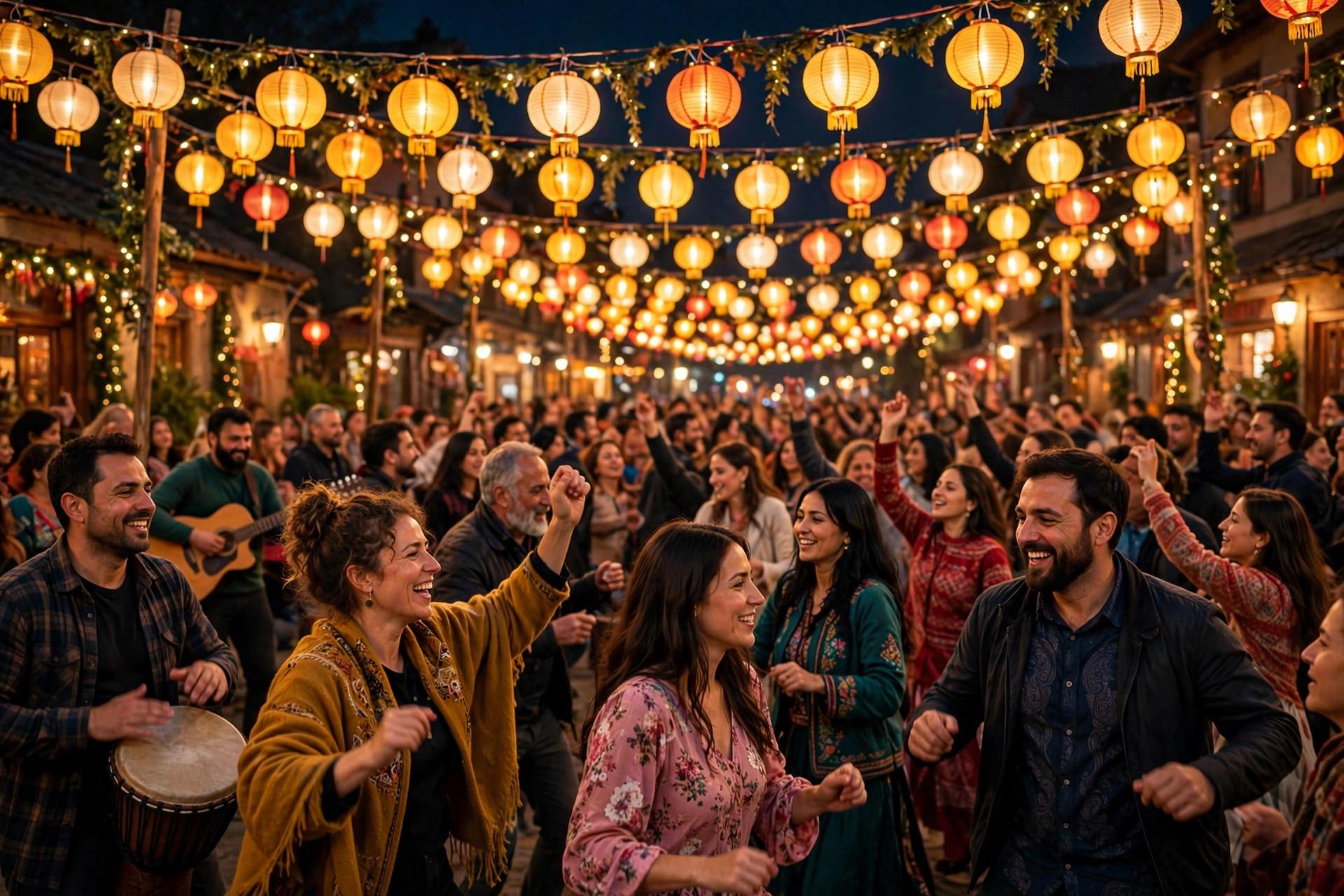
Every year, over a billion people light lamps for Diwali. Millions crowd the streets of Rio de Janeiro for Carnival. Families across East Asia gather for Lunar New Year feasts. These are not just parties — they are among the most powerful forces shaping who we are. Festivals and celebrations preserve languages, transmit values, strengthen communities, and give people a tangible connection to their heritage.
Anthropologists have long recognized ritual celebration as a cornerstone of human society. Long before nations or written constitutions, people marked the changing seasons, honored their dead, and celebrated harvests together. Those gatherings created shared memory — the raw material of cultural identity. This article explores how festivals do that work, with examples from around the world.
Why Humans Celebrate: The Deep Roots of Festival
Celebration appears to be a human universal. Every known society marks time with communal rituals — harvests, solstices, births, marriages, victories, remembrances. Evolutionary psychologists suggest these gatherings served practical purposes: coordinating agricultural calendars, reinforcing alliances, and redistributing food in times of plenty.
But festivals also do psychological work. They create what sociologists call collective effervescence — the electric feeling of belonging that comes from moving, singing, or eating together in large groups. That feeling binds individuals into a we. When you dance at Carnival or light a Diwali diya alongside millions of others doing the same thing, you are not just having fun; you are rehearsing your membership in a culture.
Rituals That Bind: How Festivals Transmit Culture
Festivals are schools without classrooms. Children learn their culture's stories, foods, music, and values by participating — often before they can articulate what any of it means. Consider what a child absorbs at a traditional celebration:
- Stories: The myths and histories reenacted or retold — the exodus at Passover, the victory of light over darkness at Diwali.
- Food: Recipes passed down through generations, often prepared only for the occasion, carrying flavors that become inseparable from identity.
- Language: Songs, prayers, and greetings in heritage languages that might otherwise fade.
- Values: Generosity at Eid al-Fitr, remembrance at Memorial Day, gratitude at Thanksgiving — each festival rehearses what the culture holds sacred.
This transmission is why festivals are so fiercely protected. To lose a festival is to lose a living classroom. Discover more about how traditions evolve in our Culture category.
Festivals Around the World
Diwali: The Festival of Lights
Celebrated by Hindus, Jains, Sikhs, and some Buddhists, Diwali marks the victory of light over darkness and good over evil. Families light oil lamps and candles, exchange sweets, and set off fireworks. With over a billion celebrants, it is one of the world's largest festivals — and for the Indian diaspora, it is often the single most important annual anchor of cultural identity.
Lunar New Year
Observed across China, Vietnam (as Tet), Korea (as Seollal), and other East and Southeast Asian cultures, Lunar New Year centers on family reunion, honoring ancestors, and wishing prosperity. Red envelopes, lion dances, and reunion dinners encode Confucian values of filial piety and family cohesion. It is the largest annual human migration on Earth, as hundreds of millions travel home.
Carnival
From Rio de Janeiro to Trinidad to New Orleans (as Mardi Gras), Carnival blends African, European, and Indigenous traditions into exuberant street celebration. In Brazil and the Caribbean, Carnival is inseparable from Afro-diasporic identity — samba schools and steel bands are institutions that preserve African musical heritage while asserting the dignity and creativity of communities shaped by slavery.
Day of the Dead (Dia de los Muertos)
Mexico's Day of the Dead turns mourning into celebration, with families building ofrendas (altars) to welcome back departed loved ones. Far from morbid, it expresses a distinctive philosophy: death as part of life's continuum. UNESCO recognized it as Intangible Cultural Heritage, and it has become a proud emblem of Mexican identity worldwide.
Celebrating Far From Home: Festivals in Diaspora
For immigrant communities, festivals take on heightened importance. When you live far from your homeland, the annual celebration may be the main thread connecting your children to their heritage. Diwali in London, Lunar New Year in Sydney, St. Patrick's Day in New York — these diaspora celebrations are often celebrated with even greater intensity than back home, precisely because identity feels more fragile abroad.
Diaspora festivals also do bridge-building work. When a city hosts a public Diwali or Lunar New Year celebration, it invites outsiders in — turning what could be an insular tradition into a point of connection. This is cultural exchange at its healthiest, and it relates closely to the difference between cultural appropriation and appreciation: participation rooted in respect rather than extraction.
Tradition vs. Commercialization: A Tension
Not everyone celebrates the way festivals are changing. Christmas generates hundreds of billions in retail sales; Diwali and Lunar New Year drive massive consumer spending. Critics argue that commercialization hollows out meaning — that festivals become shopping seasons rather than sacred times.
There is truth in the concern, but the picture is mixed. Commercial visibility can also strengthen a festival's cultural role: when major retailers stock Diwali decorations or cities fund Lunar New Year parades, it signals that the culture is seen and valued. The key question is who controls the meaning. Festivals remain culturally vital when communities themselves — not just marketers — shape how they are celebrated.
How to Experience Another Culture's Festival Respectfully
Festivals increasingly welcome outsiders — and attending one is one of the best ways to understand a culture from the inside. A few principles make the difference between a respectful guest and an intrusive tourist. First, learn the basics before you go: what the festival commemorates, what behavior is expected, and whether photography is appropriate (at solemn remembrance ceremonies, it often is not). Second, follow the lead of hosts and participants rather than treating rituals as photo opportunities. Third, spend your money inside the community — buy food from local vendors and crafts from artisans rather than mass-produced souvenirs.
Most importantly, remember that you are a guest in someone else's meaningful occasion. The family lighting Diwali lamps or building a Day of the Dead ofrenda is not performing for you; they are practicing something sacred. Approach with the same courtesy you would want at your own family's most important gathering, and festivals become what they do best: not spectacles, but invitations.
Festivals endure because they answer a fundamental human need: to belong to something larger than ourselves, to mark time with meaning, and to say, together, this is who we are. In a globalized world where cultures mix and migrate, that work is more important than ever.