
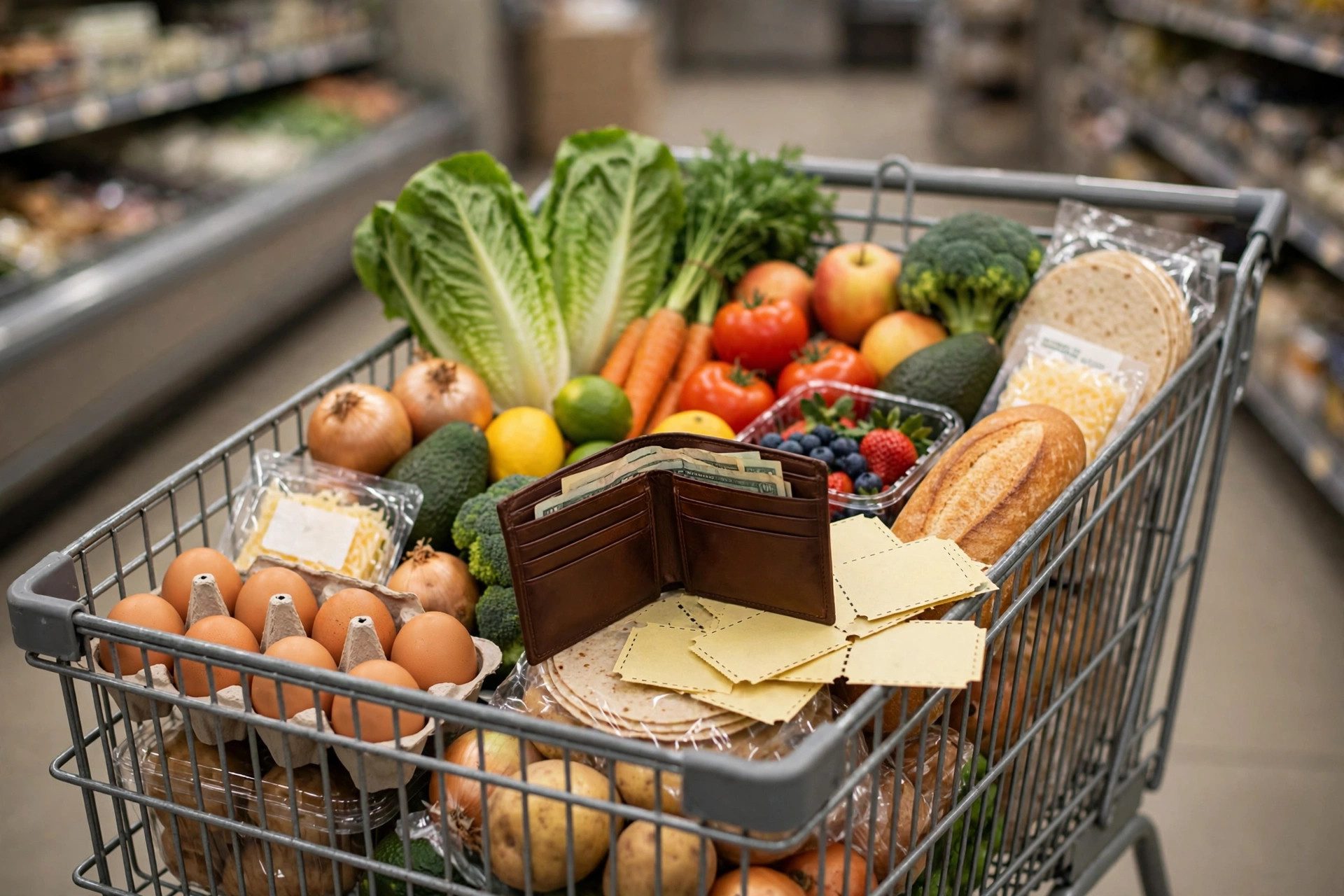
Groceries are one of the biggest expenses in most household budgets — and one of the most flexible. Unlike rent or insurance, the amount you spend on food can swing dramatically from week to week depending on how you shop, plan, and store what you buy. That flexibility is good news: it means small changes in your routine can add up to meaningful savings over a year.
This guide collects 25 proven strategies that work in any supermarket. They are practical habits that protect your budget while keeping your fridge full — no extreme couponing required. For a bigger-picture view of household spending, see our guide on how to build a monthly budget.
Start With a Plan, Not a Cart
The biggest factor in grocery spending is not prices — it is decisions. Shoppers without a plan buy more impulse items, waste ingredients, and make extra trips. Planning shifts decisions from the tempting store aisle to the kitchen table.
1. Meal plan for the week, not the day
Once a week, decide what you will eat for the next seven days before you shop. A simple list of dinners plus a breakfast and lunch rotation is enough. Planning the whole week lets you reuse ingredients across meals — roast chicken on Monday becomes chicken soup or tacos on Wednesday — which is where the real savings happen.
2. Shop your kitchen first
Before making your list, check what is already in the fridge, freezer, and pantry. Building meals around what you already own is the fastest way to cut a grocery bill, and it prevents buying duplicates of things that are about to expire.
3. Keep a running list
Maintain a single shopping list — on paper or a phone app — and add items the moment you notice you are running low. A running list captures what you actually need and nothing else, which protects you from the "just grabbing one thing" trips that quietly inflate spending.
4. Eat before you shop
Shopping hungry measurably increases impulse buying, especially of snack foods. A quick meal or even a small snack before you leave keeps your list discipline intact.
Shop the Store Like a Pro
Supermarkets are designed to maximize your spending: premium products at eye level and tempting end-of-aisle displays. A few comparison habits turn the layout to your advantage.
5. Learn unit pricing
The shelf label's unit price — cost per 100g, per liter, or per ounce — is the only fair way to compare sizes and brands. A bigger pack is not always cheaper per unit, and "value packs" sometimes cost more per unit than the regular size. Check the unit price before anything else.
6. Choose store brands over name brands
Store-brand or own-label products are typically much cheaper than national brands, and for staples like milk, flour, canned tomatoes, and frozen vegetables the quality difference is usually negligible. Try the store brand once for each staple; keep only the few name brands where you genuinely taste a difference.
7. Buy seasonal produce
Fruits and vegetables are cheapest — and taste best — when they are in season and abundant. Out-of-season produce often travels long distances and carries the cost of that journey. Learn your region's seasonal calendar and let it shape your menus.
8. Compare the perimeter and the center
Fresh basics (produce, dairy, meat) line the store's perimeter, while processed and premium-priced items fill the center aisles. Shopping mostly from the perimeter tends to be healthier and cheaper, since you are buying ingredients rather than packaged products with branding markups.
9. Ignore eye-level placement
Brands pay for eye-level shelf space. Equivalent and cheaper alternatives are often one shelf higher or lower. Make a habit of scanning the whole shelf before choosing.
Master the Freezer Strategy
Your freezer lets you buy food at its cheapest and eat it weeks later at peak quality. Shoppers who freeze strategically throw away far less.
10. Freeze in meal-sized portions
Bread, meat, cooked grains, soups, and sauces all freeze well in portioned containers or bags. Label everything with the contents and date.
11. Buy discounted "use soon" items and freeze them
Markdown stickers on meat, bread, and produce nearing their sell-by date offer deep discounts. Most of these freeze perfectly — bread for toast, meat for cooked dishes, bananas for smoothies. Check the markdown section every trip.
12. Keep a freezer inventory
A forgotten freezer is a money graveyard. Keep a simple list on the freezer door of what is inside so you actually use it. A good rule: nothing stays longer than three months.
Use Loyalty Programs and Cashback Wisely
Loyalty programs and cashback apps can genuinely reduce what you pay — but only if they serve your list instead of expanding it.
13. Join your store's free loyalty program
Most major grocery chains offer free loyalty cards or apps with member-only prices, personalized coupons, and digital offers. These programs cost nothing and can cut 5 to 10 percent off a typical basket when you buy items you already planned to buy.
14. Stack store sales with cashback apps
Cashback apps that refund a portion of your receipt work best when combined with store sales on items you need. Buy the sale item, scan the receipt, and collect the cashback. Never buy something extra just to "earn" a small rebate.
15. Watch the weekly flyer
Checking the store's weekly ad before you plan meals lets you build your menu around genuine sales. Proteins and produce on sale this week become this week's dinners. Many stores publish flyers in their apps a day or two before the sale starts.
Cut Food Waste — The Hidden Budget Killer
Every wilted lettuce and expired yogurt is money you already spent. Reducing waste is effectively a discount on everything you buy.
16. Organize the fridge by expiry
Place foods that expire soon at the front of the fridge and new purchases behind them. This simple "first in, first out" rotation dramatically cuts spoilage.
17. Understand date labels
"Best before" dates signal quality, not safety — food is often fine days or weeks past them. "Use by" dates on highly perishable items like fresh meat deserve more respect. Knowing the difference stops you from throwing away perfectly good food.
18. Cook "clean out the fridge" meals
Designate one dinner a week as a flexible meal — stir-fry, soup, omelette, fried rice, or pasta — built from whatever is left over. These meals turn would-be waste into dinner.
19. Store produce properly
Simple storage tricks extend freshness by days: herbs in water like flowers, berries unwashed until eating, greens with a dry paper towel, onions and potatoes separated. Less spoilage means fewer replacement purchases.
Buy Smart, Not Just Cheap
The cheapest price is not always the cheapest outcome. Smart buying balances price, quantity, and how much you will actually use.
20. Buy bulk only for what you reliably use
Bulk buying saves money only on non-perishables and high-use items — rice, oats, pasta, canned goods, cooking oil. Bulk perishables that spoil before you finish them cost more than smaller packs. Be honest about your household's real consumption.
21. Consider a chest freezer for big sales
A small chest freezer lets you stock up during major sales on meat, frozen vegetables, and bread — combined with a freezer inventory, it is one of the highest-return grocery investments.
22. Do the math on convenience foods
Pre-cut vegetables and single-serve packs carry heavy markups. Convenience you genuinely need is fine; convenience out of habit is expensive.
23. Limit trips and set a weekly cap
Every trip to the store is a chance to overspend, so shop once a week if possible. Set a weekly spending cap and track it in your phone as you shop.
24. Skip the bottled water habit
Where tap water is safe, a filter pitcher replaces constant bottled-water purchases at a fraction of the cost.
25. Review and repeat monthly
Once a month, glance at your grocery spending and ask what worked: which meals were cheap and popular, what got thrown away. Keep the winners, drop the waste-makers, and your system improves every month. Browse more practical money topics in our shopping section.
Putting It All Together
You do not need all 25 strategies to see results. Start with weekly meal planning, shopping with a list, and cutting food waste — most households notice a difference within a month. Then layer in unit pricing, store brands, and freezer tactics.