
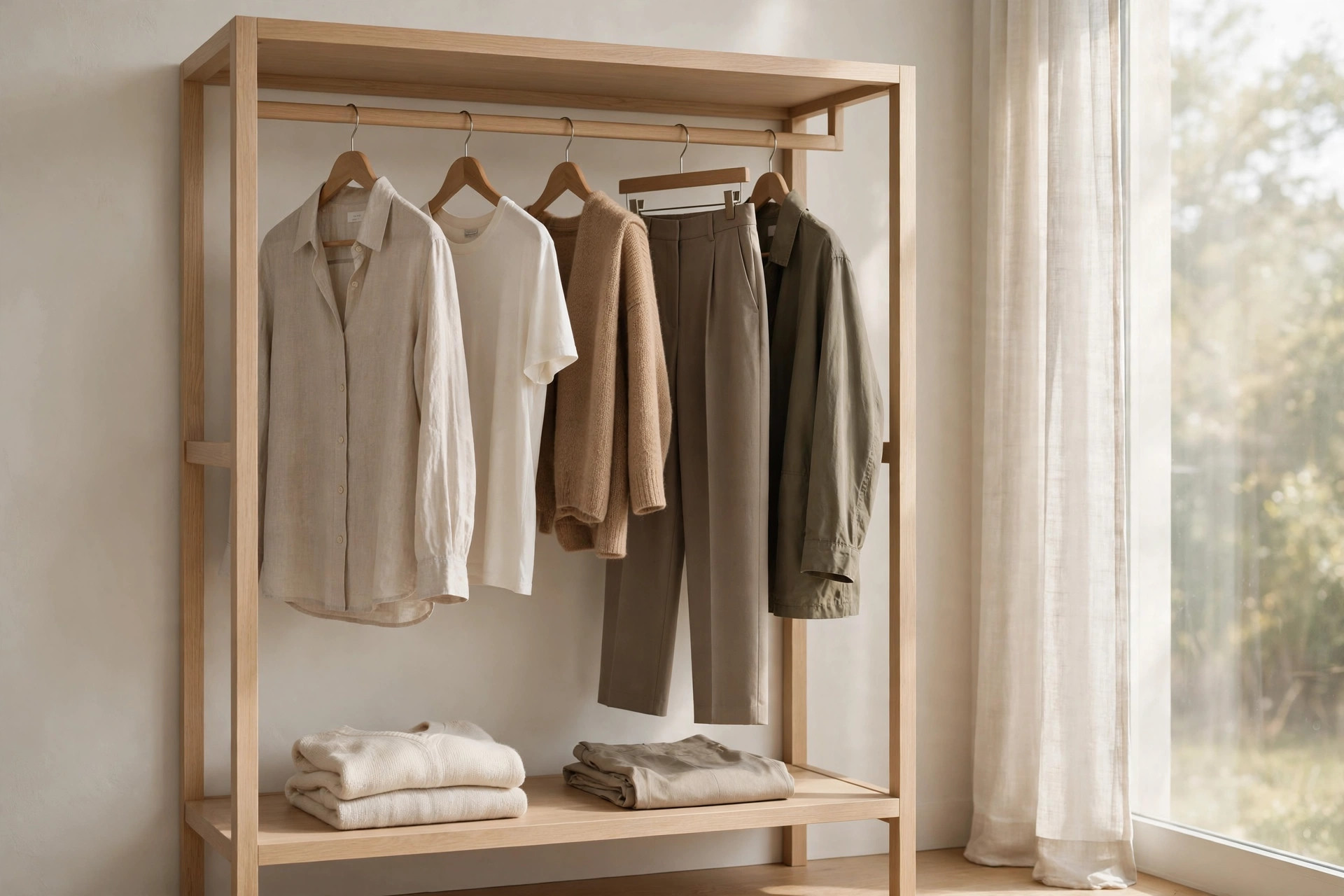
Open your closet. Chances are you own dozens of items, yet you wear the same handful on repeat. The rest sits untouched: impulse buys, pieces that never quite fit, and trends that faded before you wore them twice. A capsule wardrobe solves this problem. It is a curated collection of versatile, high-quality clothing that all works together, so getting dressed becomes effortless. This guide walks you through building one from scratch, whether your style is classic, casual, or creative.
If you are rethinking how you shop, start with our fashion guides, including our explainer on what fast fashion is and why buying less matters.
What Is a Capsule Wardrobe?
The term capsule wardrobe was popularized in the 1970s by a London boutique owner, and it describes a small, intentional collection of clothing, typically around 25 to 50 pieces, excluding underwear, workout gear, and accessories. Every item coordinates with the others, so almost any top works with almost any bottom.
The idea is not deprivation. It is curation. Instead of a closet stuffed with maybes, you keep only pieces you love, that fit well, and that suit your actual life. Most people find they wear their capsule pieces far more often than they ever wore the contents of their old, overflowing closet.
Benefits of a Capsule Wardrobe
People adopt capsule wardrobes for practical reasons that go beyond aesthetics:
- Less decision fatigue: Fewer choices mean faster, easier mornings.
- More money saved: Buying fewer, better pieces costs less over time than constant cheap purchases.
- Less clutter: A tidy closet is easier to maintain and far less stressful.
- Better style: When everything coordinates, you almost always look put-together.
- Lower environmental impact: Buying less directly reduces textile waste and demand for disposable clothing.
- Clearer personal style: Editing your wardrobe forces you to learn what you actually like.
Step 1: Audit Your Current Closet
Before buying anything, take everything out of your closet. Yes, everything. Try on each piece and sort it into four piles: love it and wear it, maybe, donate or sell, and discard. Be honest with yourself. If you have not worn something in a year, if it does not fit, or if you feel just okay about it, let it go.
Pay attention to patterns as you sort. You will probably notice you gravitate toward certain colors, fabrics, and silhouettes. These patterns are valuable data about your real preferences, as opposed to the aspirational self who buys dry-clean-only silk blouses. Keep notes on what you reach for most; this becomes the foundation of your capsule.
Step 2: Define Your Personal Style and Lifestyle
A capsule wardrobe has to fit your actual life, not an imagined one. A work-from-home parent needs different clothes than a corporate lawyer or a college student. List what you do on a typical week and estimate the percentage of time spent in each setting: work, casual, exercise, social events, and so on. Allocate your capsule pieces proportionally.
Next, define your style in three words. Classic, comfortable, and polished? Edgy, dark, and minimal? These words become your filter for every future purchase. If an item does not match at least two of your three words, it does not belong in your capsule. This simple rule prevents most impulse buys.
Step 3: Choose Your Color Palette
Color coordination is what makes a capsule wardrobe work. Choose a palette of neutrals plus a few accent colors:
- Base neutrals (60 percent): Black, white, navy, gray, or beige. These form the backbone of your outfits.
- Secondary neutrals (30 percent): Denim blue, olive, camel, or cream. These add variety while still matching everything.
- Accent colors (10 percent): One or two colors you love, like burgundy, forest green, or mustard. These appear in a few tops or accessories for personality.
Stick to your palette ruthlessly at first. Once your capsule is established, you can experiment, but the discipline of a limited palette is what creates the mix-and-match magic.
Step 4: Build Your Core Pieces
Now assemble the actual wardrobe. A typical starter capsule includes:
Tops
Five to eight tops: a mix of t-shirts, blouses or button-downs, and sweaters in your neutrals and accents. Prioritize fabrics that resist wrinkles and hold their shape, like quality cotton, merino wool, or linen blends.
Bottoms
Four to six bottoms: dark jeans, tailored trousers, a skirt or two if you wear them, and comfortable casual pants. Fit matters more than brand; well-fitting basics look expensive regardless of price.
Layers
Three to four layers: a blazer, a denim or leather jacket, a cardigan, and a coat suited to your climate. Outerwear has the biggest visual impact, so invest here.
Dresses and One-Piece Options
Two to three dresses or jumpsuits if you wear them. A simple dress in a neutral color can be dressed up or down and counts as a complete outfit in one piece.
Shoes
Three to five pairs covering your needs: everyday sneakers or flats, dress shoes, boots, and sandals for warm weather. Comfort is non-negotiable since you will wear each pair constantly.
Fill gaps gradually rather than all at once. Start with what you already own from your audit, identify what is missing, and buy one quality piece at a time. This spreads out the cost and prevents rushed decisions.
Step 5: Maintain Your Capsule Wardrobe
A capsule wardrobe is not a one-time project; it is an ongoing practice. Reassess seasonally: at the start of each season, review your pieces, store off-season items, and note any gaps. Follow a one-in, one-out rule to prevent creep: when you buy something new, something old leaves.
Take care of what you own. Wash clothes in cold water, air-dry when possible, and repair small damage promptly. Quality pieces last for years with basic maintenance, which is the entire economic logic of the capsule approach. Keep a running wishlist on your phone so that when you do shop, you buy with intention instead of impulse.
Common Mistakes to Avoid
Beginners often stumble in predictable ways. Do not throw everything away and start from zero; work with what you have. Do not copy someone else's capsule exactly, because their lifestyle and coloring differ from yours. Do not aim for an unrealistically tiny number of pieces at first; you can always edit down later. And do not confuse minimalism with joylessness. Your capsule should include pieces that make you feel great, including a few fun items that express your personality.
The Bottom Line
Building a capsule wardrobe is really about changing your relationship with clothing: from accumulation to intention. Start by auditing what you own, define your style and palette, and build gradually with versatile pieces you genuinely love. Within a few months, you will spend less time choosing outfits, less money on clothes you never wear, and more time feeling confident in what you put on. That is the real payoff of dressing with less.