
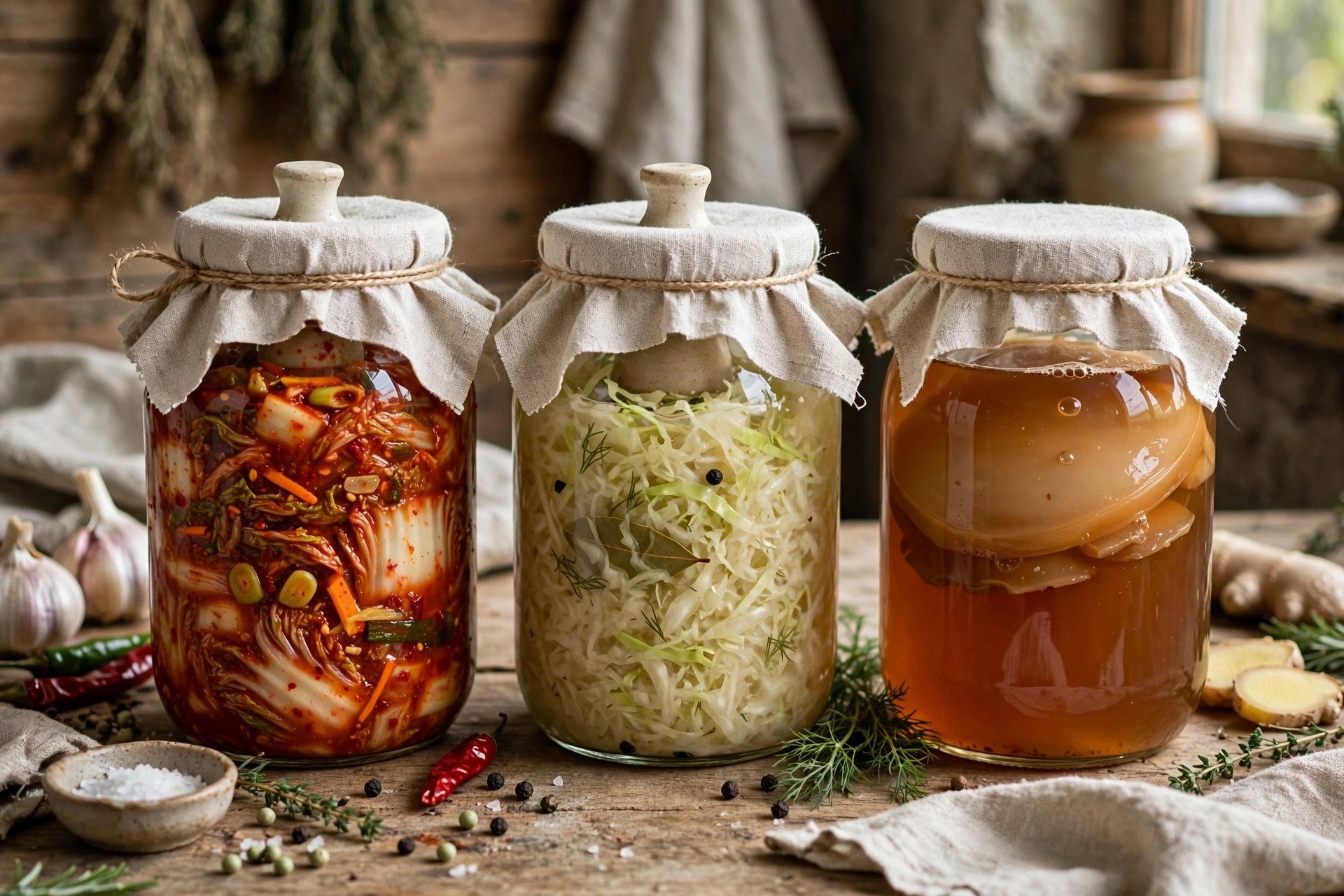
Long before anyone knew microbes existed, humans were expert fermenters. Bread, cheese, wine, yogurt, soy sauce, kimchi — the world's great staple foods are overwhelmingly products of fermentation, a process in which microorganisms transform raw ingredients into something more flavorful, more durable, and often more nutritious. It is humanity's oldest food technology, and it is experiencing a remarkable revival.
Whether you want to understand the science, explore global fermented foods, or start fermenting in your own kitchen, this guide covers what fermentation is, how it works, and how to do it safely.
What Fermentation Actually Is
Fermentation is a metabolic process in which microorganisms — primarily yeasts, bacteria, and molds — convert carbohydrates (sugars and starches) into other compounds, typically acids, gases, or alcohol. Crucially, they do this without oxygen (anaerobically), which distinguishes fermentation from the oxygen-using respiration that powers our own cells.
In practical terms: when you ferment cabbage into sauerkraut, lactic acid bacteria consume the cabbage's sugars and produce lactic acid. The acid sours the flavor, preserves the food by inhibiting spoilage organisms, and creates an environment where beneficial microbes thrive. The same basic logic — microbes eating sugars and excreting flavor — underlies nearly all fermented foods.
Fermentation does three valuable things at once: it preserves food (acids and alcohol deter pathogens), it transforms flavor (creating the tang of yogurt, the funk of aged cheese, the complexity of soy sauce), and it can improve nutrition (breaking down hard-to-digest compounds and sometimes generating vitamins). For the story of how fermentation creates chocolate's flavor, read how chocolate is made.
A 10,000-Year-Old Technology
Fermentation predates written history. Archaeological evidence places fermented beverages in China around 7000 BCE and in the Middle East not long after. Every agricultural civilization independently discovered it — because it kept happening on its own. Leave milk out, and it sours into something yogurt-like. Leave grape juice alone, and it becomes wine.
Before refrigeration, fermentation was survival technology. Cultures in cold climates fermented cabbage (sauerkraut, kimchi); dairy cultures fermented milk into yogurt, kefir, and cheese; grain cultures made beer, bread, and porridges. The specific microbes were local — which is why every region developed its own signature ferments. It was only in the 19th century that Louis Pasteur revealed the microbial basis of it all, turning an art into a science.
The Three Main Types of Food Fermentation
Lactic acid fermentation
Lactic acid bacteria (like Lactobacillus) convert sugars into lactic acid. This is the workhorse of the fermented food world: yogurt, sauerkraut, kimchi, pickles, sourdough, and salami all depend on it. The acid gives these foods their characteristic tang and makes them inhospitable to spoilage microbes.
Alcoholic (ethanol) fermentation
Yeasts (chiefly Saccharomyces cerevisiae) convert sugars into ethanol and carbon dioxide. This produces wine, beer, cider, and spirits — and the CO2 is what leavens bread dough. Sourdough is a beautiful partnership: wild yeasts produce the gas while lactic acid bacteria provide the sour flavor.
Acetic acid fermentation
Acetic acid bacteria convert alcohol into acetic acid — vinegar. This is a two-step process (first alcohol, then acid) behind wine vinegar, apple cider vinegar, and kombucha, where yeasts and acetic acid bacteria work together in a symbiotic culture.
Many traditional foods combine types: soy sauce involves mold, yeast, and bacterial fermentations over months; aged cheeses host entire microbial ecosystems. Discover more kitchen science in our Food category.
Fermented Foods Around the World
- Kimchi (Korea): Napa cabbage and radishes fermented with chili, garlic, and ginger. A cornerstone of Korean cuisine and identity, with hundreds of regional varieties.
- Yogurt and kefir: Milk fermented by bacterial cultures (yogurt) or by symbiotic grains of bacteria and yeast (kefir). Staples from the Balkans to Central Asia.
- Miso and soy sauce (Japan/China): Soybeans (and grains) fermented with koji mold, then aged for months or years into deeply savory condiments.
- Sourdough: Bread leavened by wild yeast and bacteria rather than commercial yeast — humanity's original leavened bread, now beloved for its flavor and digestibility.
- Kombucha: Sweetened tea fermented by a SCOBY (symbiotic culture of bacteria and yeast) into a tangy, lightly fizzy drink.
- Tempeh (Indonesia): Soybeans bound into a firm cake by Rhizopus mold — nutty, protein-rich, and increasingly popular worldwide.
Are Fermented Foods Good for You?
Fermented foods have a justified health halo, with some caveats. The evidence-based benefits include:
- Gut health: Live-culture ferments like yogurt, kefir, kimchi, and unpasteurized sauerkraut deliver probiotics — live microbes associated with improved digestion and emerging links to immune and even mental health.
- Digestibility: Fermentation pre-digests food. Lactose-intolerant people often tolerate yogurt and hard cheeses because bacteria have consumed much of the lactose; sourdough fermentation breaks down some gluten and FODMAPs.
- Nutrient availability: Fermentation can increase B vitamins and make minerals more absorbable by breaking down phytic acid in grains and legumes.
The caveats: many commercial products are pasteurized after fermenting (killing the live cultures), some are high in sodium, and probiotic marketing often outruns the evidence for specific products. Fermented foods are a healthy dietary pattern, not a miracle cure.
How to Start Fermenting at Home (Safely)
Vegetable ferments like sauerkraut are the ideal beginner project — nearly foolproof with basic hygiene:
- Start simple: Shredded cabbage + 2% salt by weight is the classic sauerkraut formula. Massage until juicy, pack tightly into a clean jar, keep everything submerged under the brine.
- Salt is your safety net: The right salt concentration (around 2% for vegetables) favors lactic acid bacteria while suppressing spoilage organisms. Measure with a kitchen scale.
- Keep it clean, not sterile: Wash hands, jars, and produce well. You do not need lab sterility — the salt and acid do the protecting.
- Watch and wait: Ferment at room temperature (18–22°C / 65–72°F is ideal). Bubbles within a few days mean it is working. Taste after a week; refrigerate when you like the flavor.
- Know the warning signs: Kahm yeast (a harmless white film) can be skimmed. Fuzzy mold in colors like black, pink, or blue means discard the batch. Trust your nose — a ferment should smell pleasantly sour, never putrid.
From ancient preservation to modern gut-health science, fermentation connects us to ten thousand years of human ingenuity — and it all starts with salt, vegetables, and patience.